Find your favorite spot.
Pour a drink you enjoy.
Settle in.
Experience One - Stories Matter
Every one of us has been living inside a story we did not write.
This week we begin to see it.

A Word From Your Guide

Before we begin I want to tell you something about why we are here together. Every one of us has been living inside a story we did not write. We absorbed it so gradually, over so many years, that most of us never noticed it arriving. It came through the books we read as children, the movies we watched, the things we were told we could and could not do, the rooms we were allowed into and the rooms we were not.
This program is not about making you angry, although you might get a little angry. It is about helping you see the story clearly for the first time. Because you cannot put down something you cannot see.
Welcome to your hero's journey.
The Story Of Your Name
Elizabeth Lesser - In Her Own Voice



Meet Cassandra
Her story, in your voices
Sit side by side.
Decide who is Storyteller One
and who is Storyteller Two.
Storyteller One reads the words in brown.
Storyteller Two reads the words in navy.
Read slowly.
Then read it a second time
and switch voices.
You will hear something new
the second time through.

Storyteller One
Cassandra was a princess of Troy.
Beautiful, gifted, sought after by gods and mortals alike.
Apollo, son of Zeus, wanted her.
To win her, he gave her the gift of prophecy.
She could SEE THE FUTURE CLEARLY.
Storyteller Two
When she refused his advances,
he did not take the gift back.
Instead he cursed her.
You will always SEE WHAT IS COMING, he said.
But NO ONE WILL EVER HEAR YOU.
Storyteller One
She knew Troy would be destroyed.
She warned everyone around her,
clearly and repeatedly.
THEY CALLED HER CRAZY.
It happened exactly as she said it would.
Her city burned. Her brothers died.
Everything Cassandra had warned them about came true.
And she had been DISMISSED at every turn.
Storyteller Two
Elizabeth Lesser named this book
after Cassandra for a reason.
It is not just an old myth.
It is a PATTERN so many women live with,
without ever having a name for it.
Today, there is no burning city.
But women are still doubted, dismissed, and not heard.
It shows up in our homes, our work, our bodies,
our everyday lives.
As mothers,
we are made to feel guilty for working,
and invisible for staying home.
In a classroom,
we learn early to sit quietly and behave,
while boys will be boys.
In a doctor's office,
we know something is wrong,
and are treated, but not heard.
In a meeting,
our ideas are ignored.
On the job,
we are paid less, for the same work.
In professions filled mostly by women,
like teaching, nursing, and caring for others,
the pay says the work matters less.
In line to lead,
we have the experience and wisdom,
and someone else gets the job.
In a locker room, an office, a party,
we report what was done to us,
and are not believed.
Some of these may be your story.
All of them are someone's.
It happens to one woman at a time.
And to all of us at once.
We KNEW SOMETHING.
We SAID SOMETHING.
And we are not the only ones who pay for it.

Storyteller One
Cassandra was not wrong.
She was NOT HEARD.
She was DOUBTED.
She was QUESTIONED.
She was NOT BELIEVED.
Troy did not fall because Cassandra was wrong.
It fell because NO ONE LISTENED.
And a woman who is doubted long enough
begins to DOUBT HERSELF.
This is not an old story.
It is happening right now, to women we know.
Maybe to one of you.
We are not prophets.
But we have WISDOM.
We see what others miss.
We sense what is coming.
And too often, no one listens.
When a woman is not heard,
we all lose something.

A Story I Didn’t Know I Was Living
The School
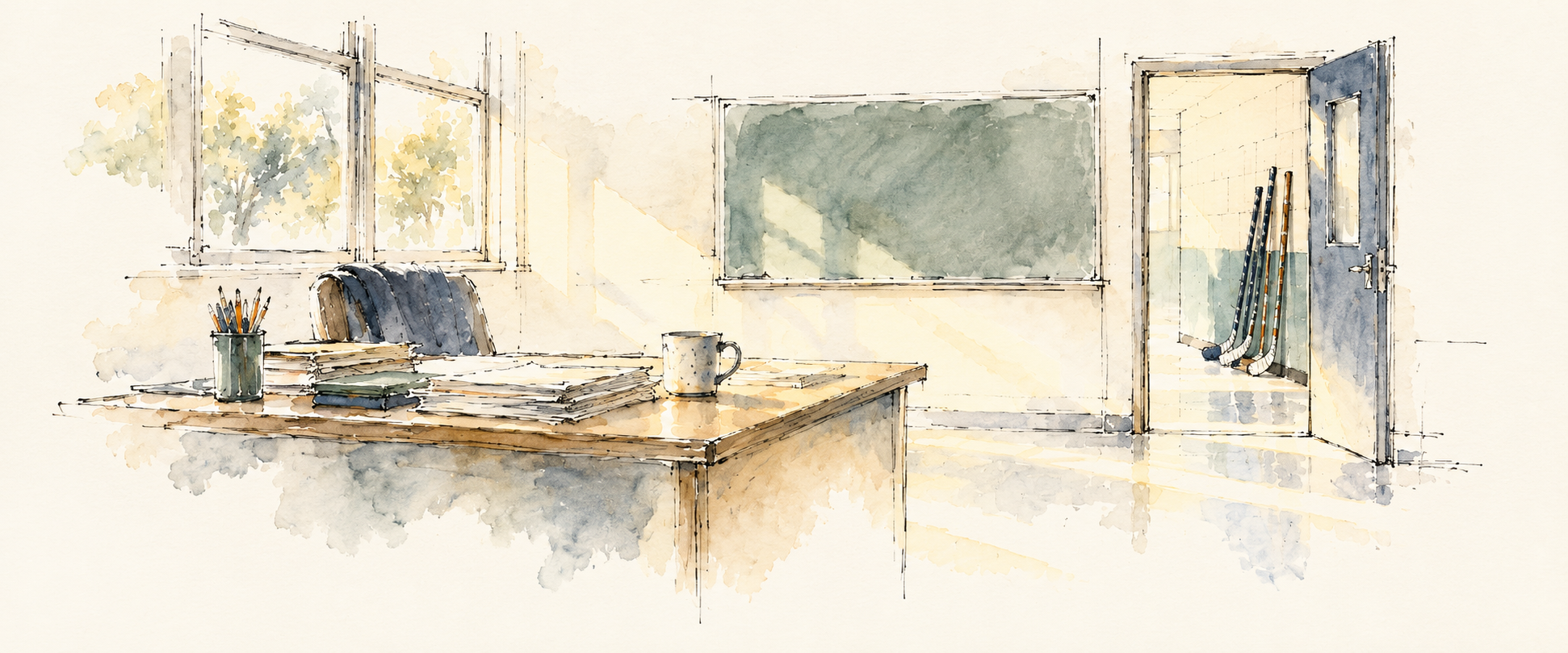
For thirteen years I taught English at a small private school
for boys. It was an academically rigorous school for young hockey players. And the boys were genuinely great kids.
The teaching staff was mostly women. Almost all of us had master's degrees. We planned. We prepared. We stayed late. We knew our students. We poured ourselves into our work,
the way women do, completely.
Most years, there was only one man on our teaching staff.
He taught history. He would stay a few years, move on, and another man would take his place. Over thirteen years, there were four of them. It just worked out that way. Meanwhile most of the women on our staff were there for ten years or more. We were the ones those boys grew up with.
We were the constants.
The Ceremony
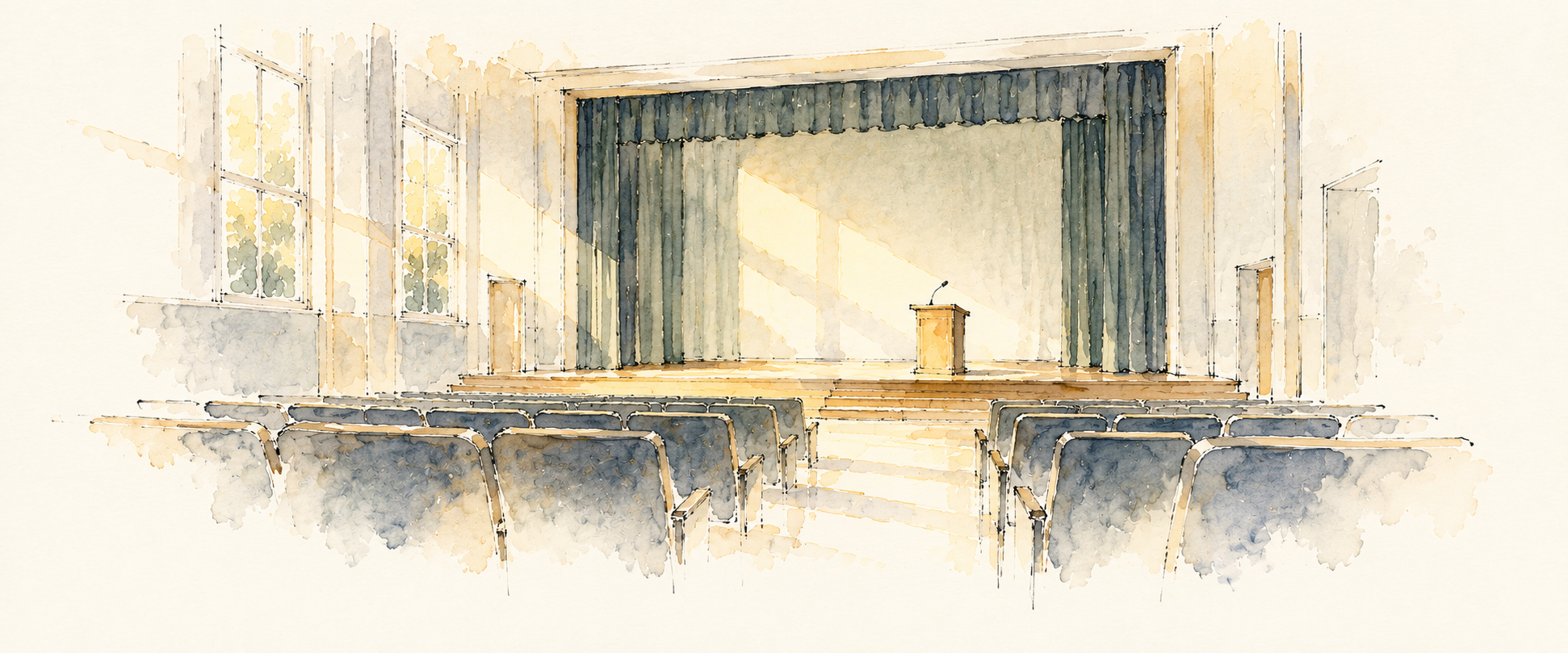
At the end of every year the whole school gathered for a big ceremony. Parents came, the student body assembled, and the principal stood up to thank the teachers by name.
One by one he called us, and the boys applauded.
It was a good thing. He meant it as a good thing.
But when the principal called the name of the one man on staff, the boys went absolutely wild. It did not matter who he was. Only that he was a man.
Yet the women had given those boys so much more of our time. We could have taught anywhere. We chose to stay.
We knew these boys. We knew what they loved, what they struggled with, how each of them learned. We planned for them. We prepared for them.
Imagine if we had all come and gone every few years.
In a school that small, there would have been no consistency.
No trust. The boys knew we would be there. At lunch.
After school for extra help. Next year, and the year after that.
And still, when each female teacher’s name was called, the room offered a respectful clap and moved on.
Noticing and Speaking Up
The first time I heard the difference in the applause, I thought, That is strange. And then it happened the next year. And the next. And the next. A different man. The same roar. By the time it had happened enough times, I had stopped wanting to go to the ceremony at all. Not because I needed the applause. Because I was watching the cultural story play out right in front of me. The one that whispers men are worth more than women.
When I began talking to the other women teachers, I was struck by their reactions. Some felt the imbalance but seemed willing to let it pass. Others accepted it almost as though it were the natural order of things. One younger teacher saw it immediately and was grateful that I was going to speak up. I began to wonder how many things we women have learned to live with simply because they've always been that way.
So I went to the principal. I told him what I had been noticing. Year after year, the boys roared for whichever man was on staff, and the women got a polite clap. I told him I knew he meant the ceremony as thanks, and I was grateful for that. But I asked him to please just thank the teachers together, as a group, and let the applause be for all of us.
He listened. He accepted it. But there was something in the way he received it, not unkind, but easy, almost offhand, that told me he had never once had to carry this feeling himself.
This is just how it is.
The Story Stops Being Told
The principal agreed to announce the teachers together. That year the boys were so primed to erupt for the one man on staff that when his name was not called separately, they were surprised and began chanting his name. The ritual had already been handed down, boy to boy, class to class, the unspoken rule that the man in the room deserved the loudest applause.
The older boys who had carried that ritual eventually graduated and moved on. The younger ones never adopted it because it was never passed down to them. Year after year, the principal continued thanking all the teachers together. Eventually there were no students left who remembered it any other way. The room simply applauded. For all of us. The way it always should have been.
Something else changed, too. Several of the women teachers I'd spoken with earlier hadn't seemed particularly troubled by what was happening. But now they began to recognize how easily they'd accepted something that wasn't right, simply because it had always been that way. It was as though they could finally see something that had been right in front of them for years.
That is what happens when someone interrupts the story.
It just quietly stops being told.
A Name for the Feeling
Maybe you have felt something like this too. A moment that stung, and you could not say why.
Cassandra Speaks gives that feeling a name. And week by week, in this experience, we will find the names together.
Because we have all been handed stories. Not in a single conversation, not by one person who meant harm. But quietly, through culture, through what gets applauded and what gets a polite clap, through who gets thanked and how. Stories that told us, without ever saying it out loud, what women are worth and what men are worth. Stories we absorbed so completely we stopped noticing them.
Until someone names it.
Questions to Sit With
Have you ever felt uneasy in a moment and wondered if being a woman was part of it?
Have you ever looked around the room and thought, am I the only one feeling this?
If something comes to mind right now, share it with each other. If it doesn’t, carry the question with you this week. It might arrive while you’re getting ready in the morning, or driving, or somewhere quiet. That’s exactly how it’s supposed to work.
Five Quotes, Five Moments
Build note:
The five reflection cards are a separate file, waypoint-seven-cards.html.
That one stays as a code block.
The Answer
“Women have been ignored, ridiculed, punished, even killed for their opinions forever. But without the balancing power of her voice, the female voice, things in this world end in disaster.
Cassandra’s tale is your tale. It is all of our tales. We must speak, and we must be taken seriously. We must change the way the story ends.”
— Elizabeth Lesser, Cassandra Speaks
Update video. Add another step to the path their journey. Insert new video.
Your Hero’s Journey